V-Hub
Overview
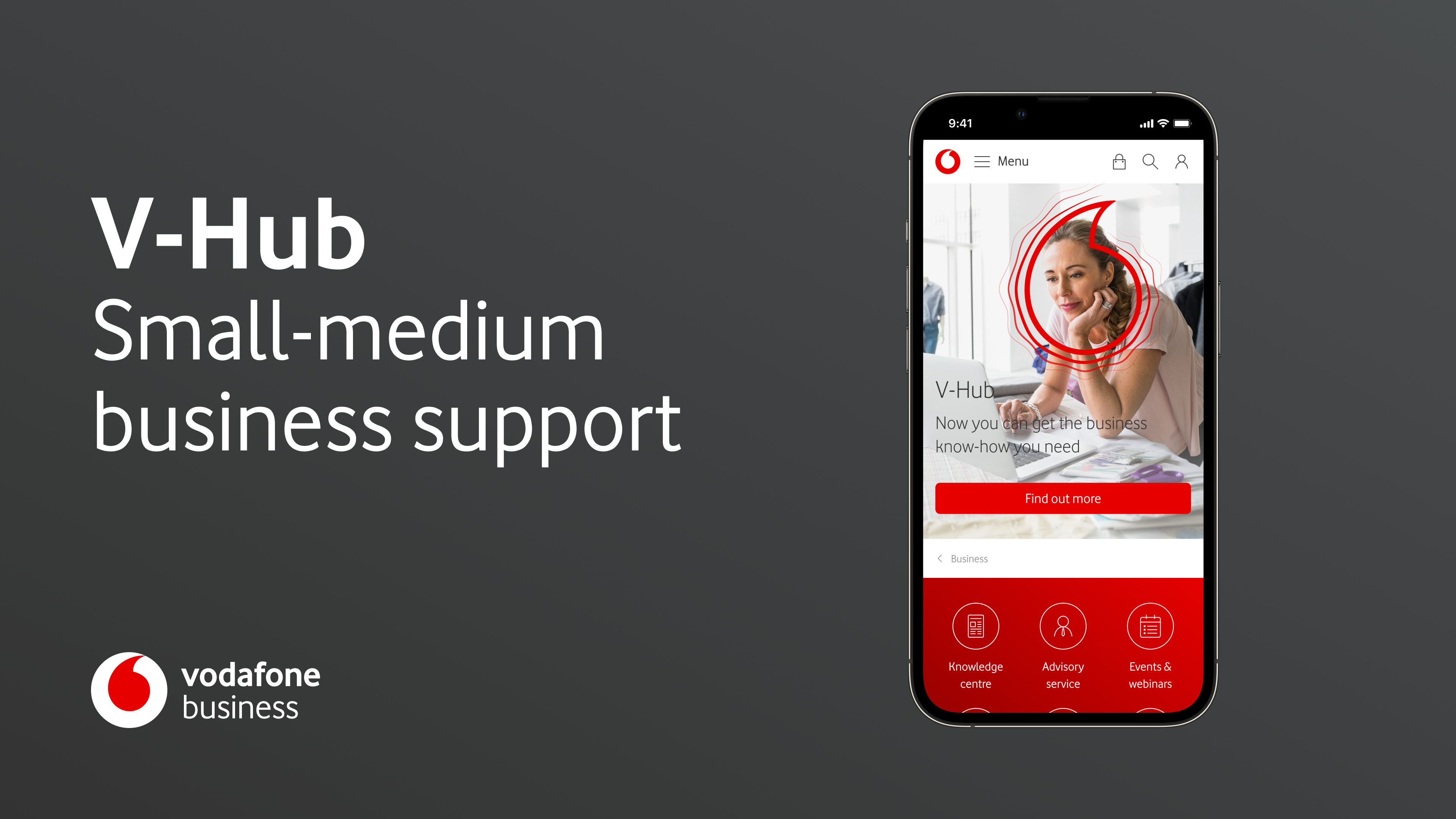
I redesigned and migrated Vodafone’s V‑Hub microsite blueprint into a new design system used by SME and SOHO customers across 14 countries.
The new blueprint modernized the experience while preserving core content, enabling local markets to launch and maintain their own V‑Hub sites with minimal development effort.
Problems
The original blueprint was tightly coupled to legacy templates, making it hard for local markets to localize content, introduce new modules, or align with Vodafone’s evolving design system. Inconsistent layouts and navigation patterns across countries also made it difficult to scale AI-driven tools and track performance in a comparable way.
Design
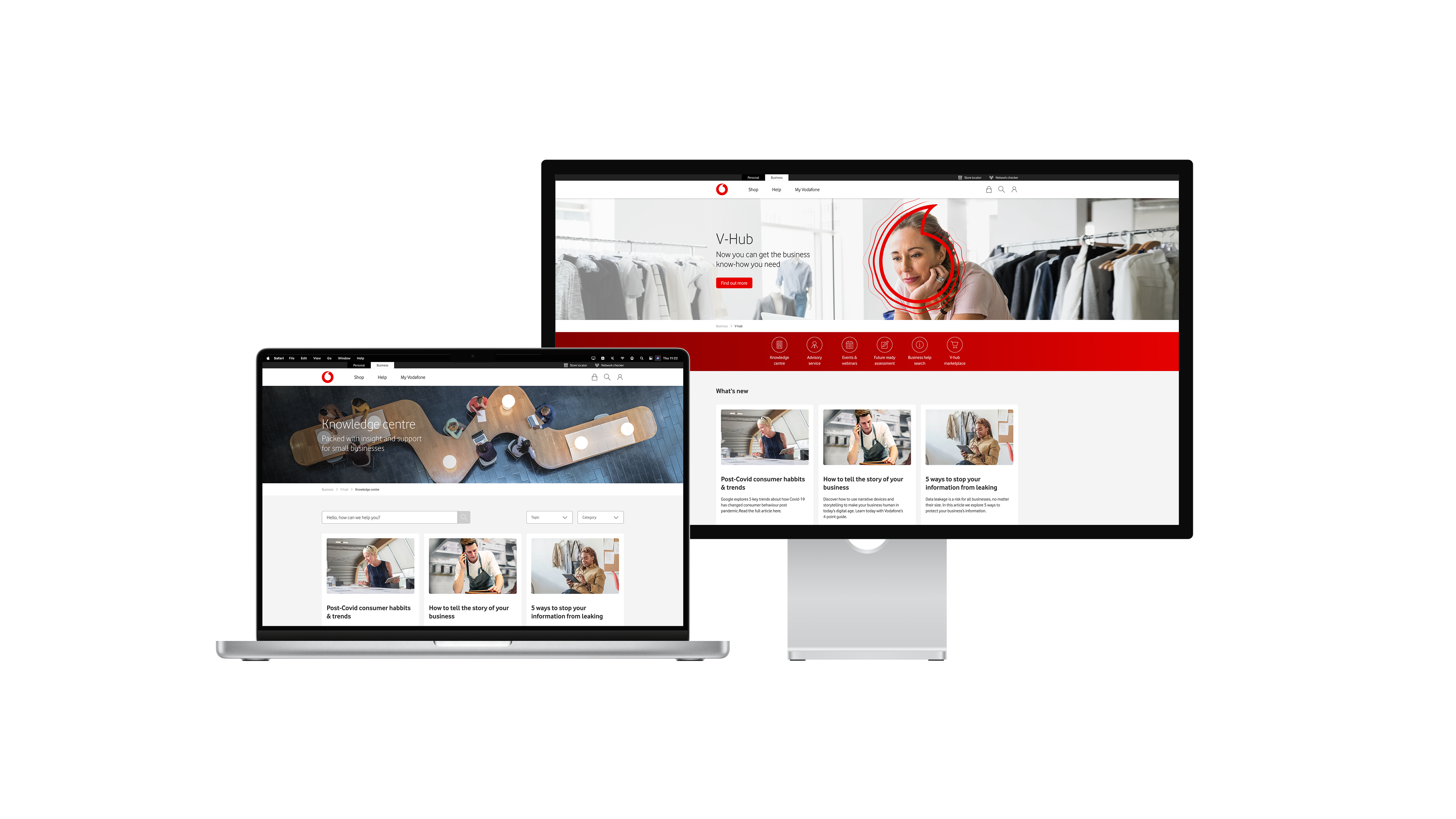
I translated V‑Hub into the new design system, creating a modular component library (hero, resource cards, AI tools, assessments, and guides) that could be configured per market without custom code.
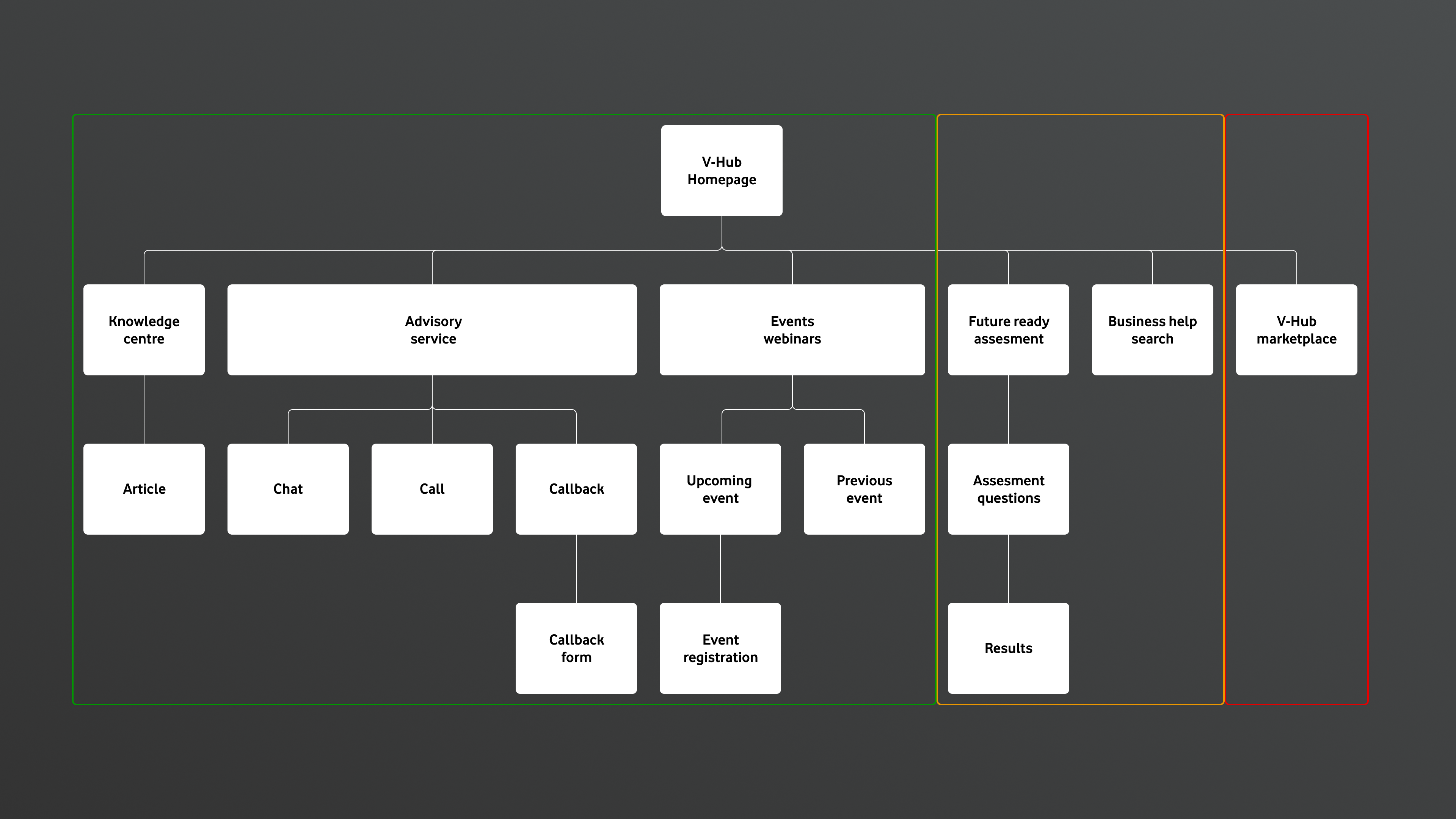
The information architecture was simplified around key jobs-to-be-done for SMEs and SOHOs, while flexible content slots and localization rules allowed each country to surface its own languages, offers, and regulatory content within a consistent global UX.
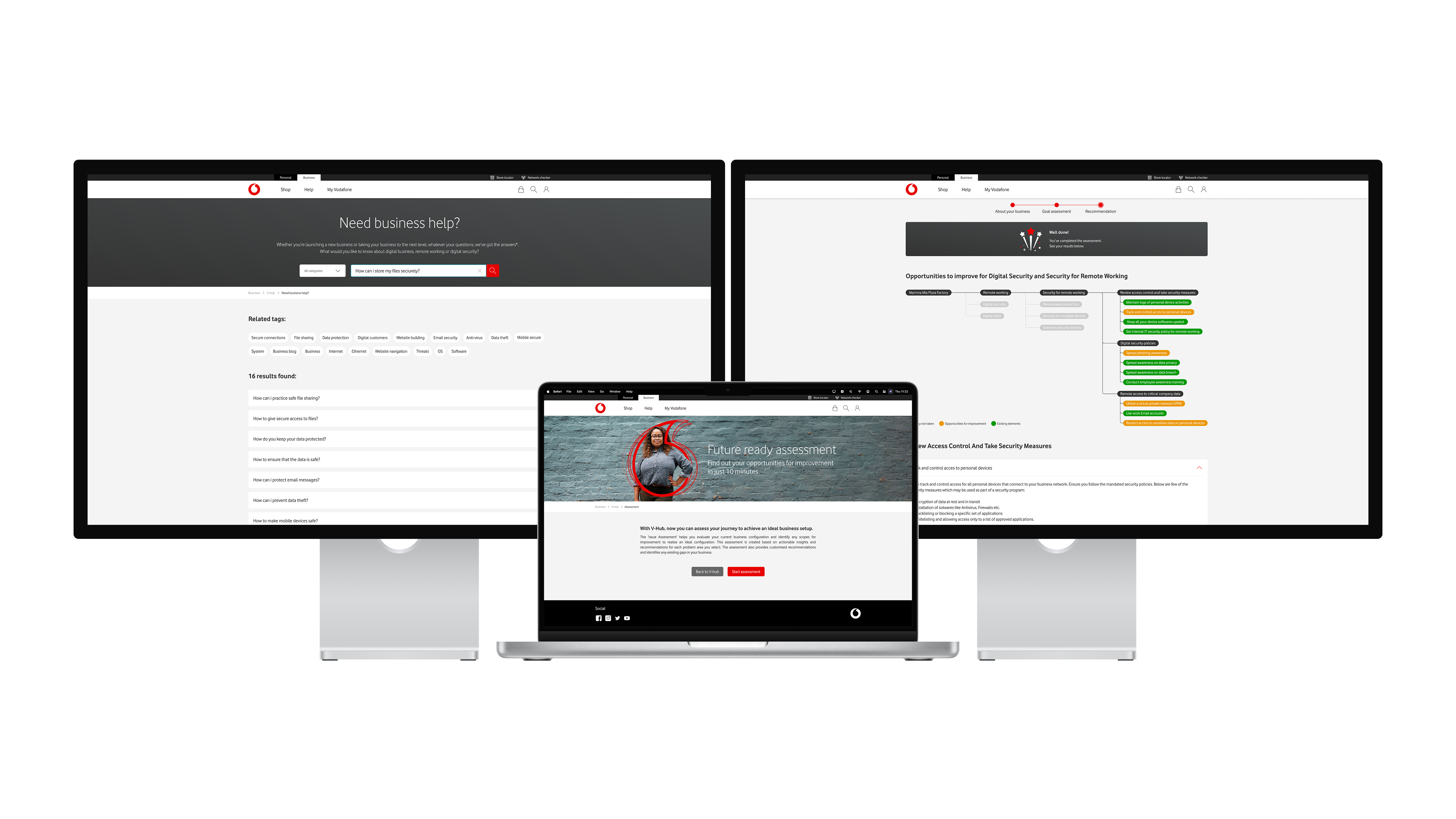
Collaboration with Tata Consultancy Services (TCS) was key to integrating advanced tools like the AI-driven Business Help Search and the Future Ready Assessment, ensuring technical feasibility and a seamless user experience.
Outcomes
The redesigned blueprint was adopted by 14 Vodafone markets, giving teams a faster, lower‑risk way to launch and evolve their V‑Hub sites while staying on-brand. Thanks to the improved UX and easier localization, usage grew from 3.6 million to 5.2 million users, strengthening V‑Hub’s role as a core part of Vodafone’s SME and SOHO digital strategy.
Portfolio

V-Hub
Overview
I redesigned and migrated Vodafone’s V‑Hub microsite blueprint into a new design system used by SME and SOHO customers across 14 countries.
The new blueprint modernized the experience while preserving core content, enabling local markets to launch and maintain their own V‑Hub sites with minimal development effort.
Problems
The original blueprint was tightly coupled to legacy templates, making it hard for local markets to localize content, introduce new modules, or align with Vodafone’s evolving design system. Inconsistent layouts and navigation patterns across countries also made it difficult to scale AI-driven tools and track performance in a comparable way.
Design
I translated V‑Hub into the new design system, creating a modular component library (hero, resource cards, AI tools, assessments, and guides) that could be configured per market without custom code.
The information architecture was simplified around key jobs-to-be-done for SMEs and SOHOs, while flexible content slots and localization rules allowed each country to surface its own languages, offers, and regulatory content within a consistent global UX.
Collaboration with Tata Consultancy Services (TCS) was key to integrating advanced tools like the AI-driven Business Help Search and the Future Ready Assessment, ensuring technical feasibility and a seamless user experience.
Outcomes
The redesigned blueprint was adopted by 14 Vodafone markets, giving teams a faster, lower‑risk way to launch and evolve their V‑Hub sites while staying on-brand. Thanks to the improved UX and easier localization, usage grew from 3.6 million to 5.2 million users, strengthening V‑Hub’s role as a core part of Vodafone’s SME and SOHO digital strategy.
Portfolio
V-Hub
Overview
I redesigned and migrated Vodafone’s V‑Hub microsite blueprint into a new design system used by SME and SOHO customers across 14 countries.
The new blueprint modernized the experience while preserving core content, enabling local markets to launch and maintain their own V‑Hub sites with minimal development effort.
Problems
The original blueprint was tightly coupled to legacy templates, making it hard for local markets to localize content, introduce new modules, or align with Vodafone’s evolving design system. Inconsistent layouts and navigation patterns across countries also made it difficult to scale AI-driven tools and track performance in a comparable way.
Design
I translated V‑Hub into the new design system, creating a modular component library (hero, resource cards, AI tools, assessments, and guides) that could be configured per market without custom code.
The information architecture was simplified around key jobs-to-be-done for SMEs and SOHOs, while flexible content slots and localization rules allowed each country to surface its own languages, offers, and regulatory content within a consistent global UX.
Collaboration with Tata Consultancy Services (TCS) was key to integrating advanced tools like the AI-driven Business Help Search and the Future Ready Assessment, ensuring technical feasibility and a seamless user experience.
Outcomes
The redesigned blueprint was adopted by 14 Vodafone markets, giving teams a faster, lower‑risk way to launch and evolve their V‑Hub sites while staying on-brand. Thanks to the improved UX and easier localization, usage grew from 3.6 million to 5.2 million users, strengthening V‑Hub’s role as a core part of Vodafone’s SME and SOHO digital strategy.
Portfolio