Velocity
What is Velocity?
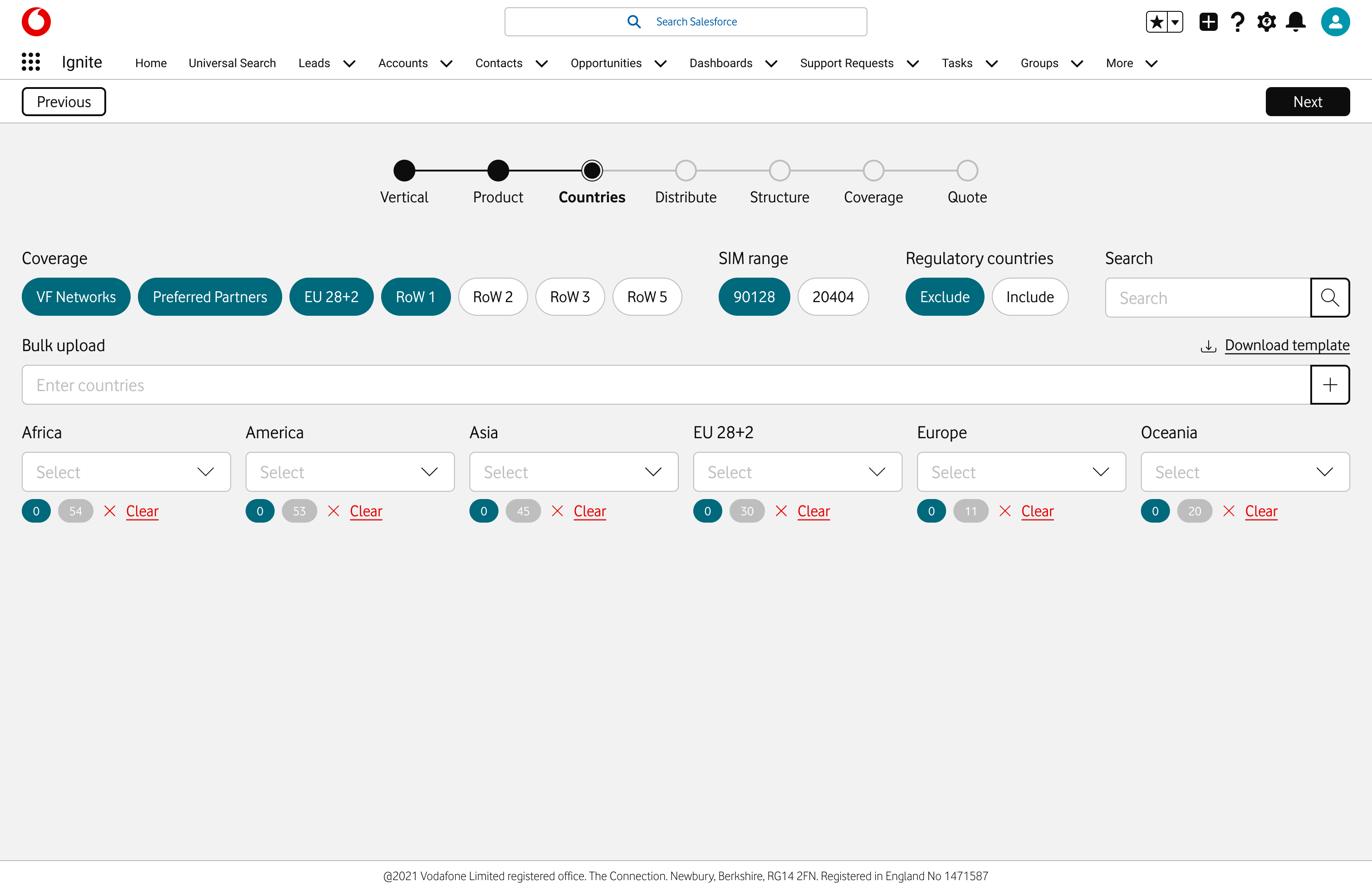
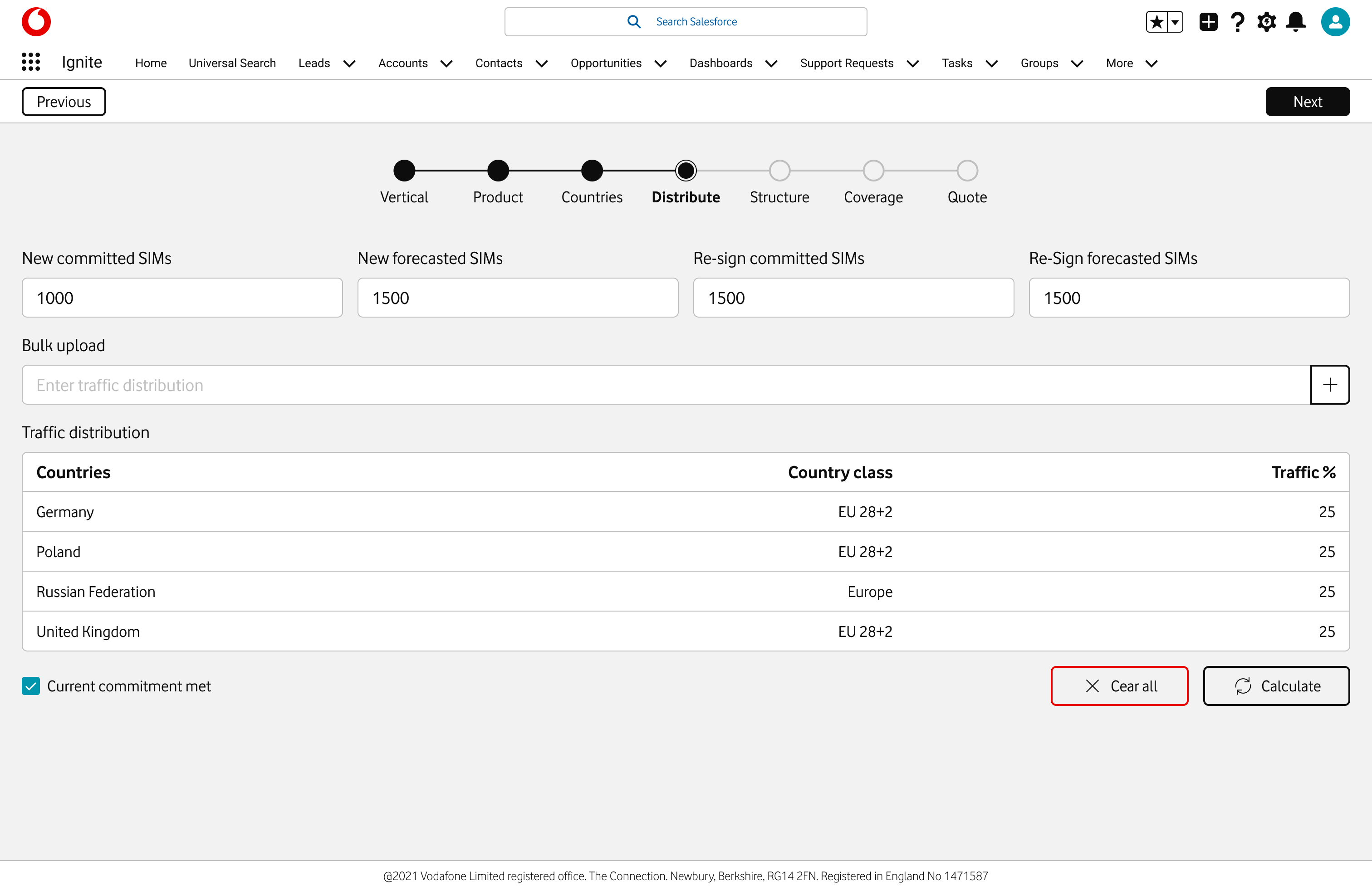
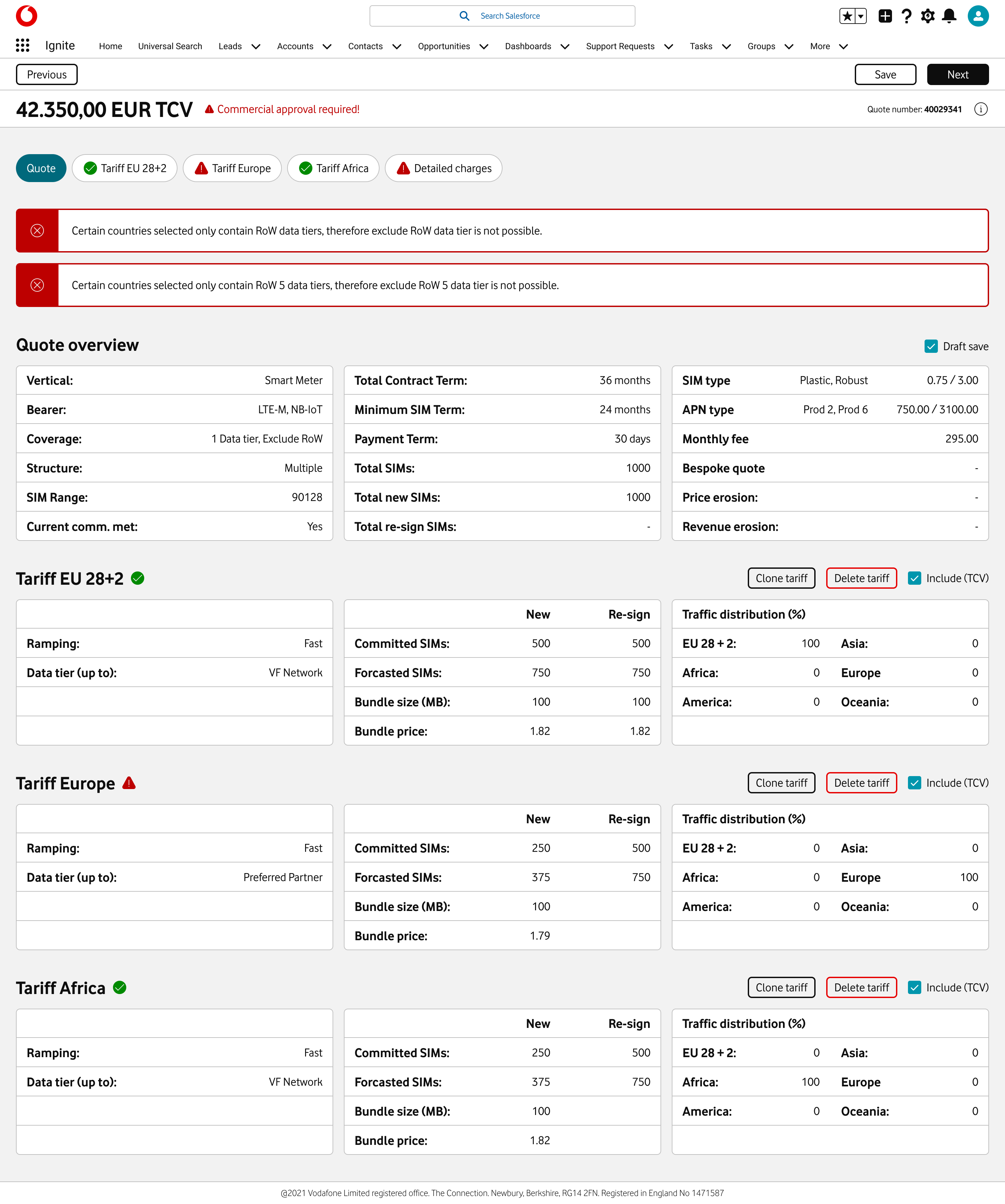
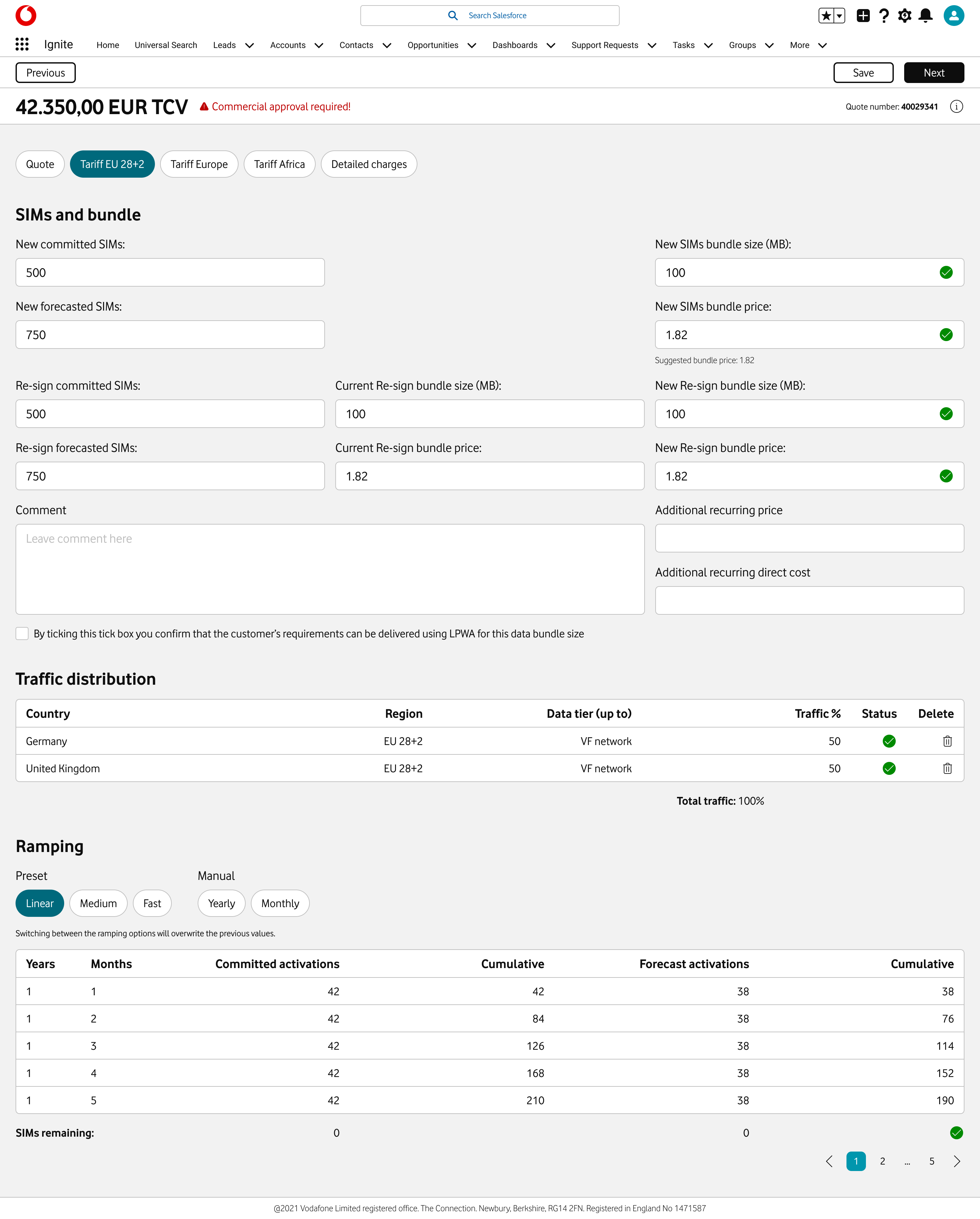
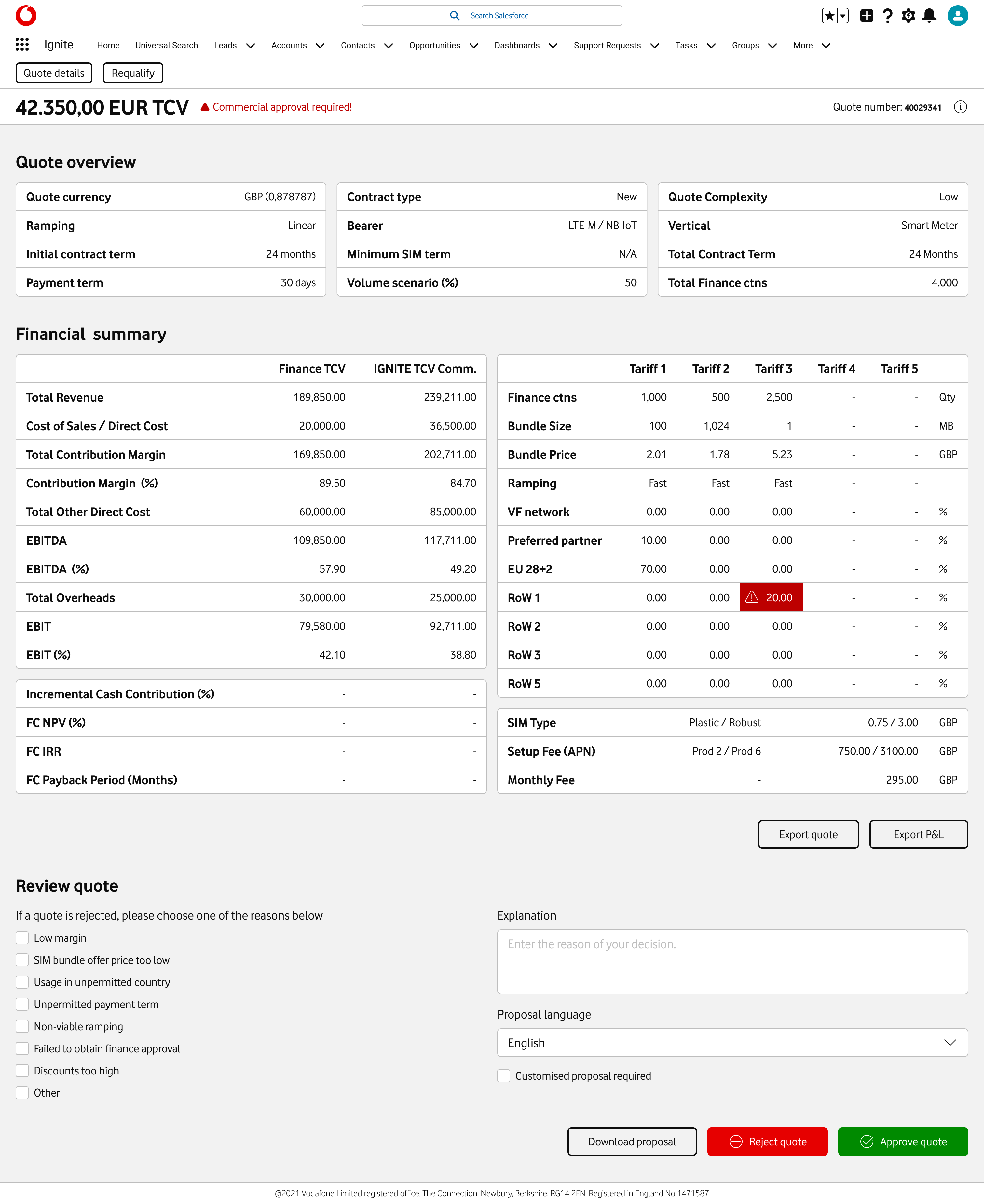
Velocity is Vodafone’s enterprise Configure-Price-Quote (CPQ) and pricing platform used by global commercial teams to build quotes, configure usage scenarios, and support Mobility + IoT opportunities. It’s a highly technical product with complex business rules, multi-step flows, and strict performance expectations across journey steps.
Goal & Problems
Velocity had evolved through years of incremental changes across multiple teams. When I took over the UX ownership, the experience reflected that history:
- Convoluted, fragmented journeys spread across legacy patterns
- Inconsistent layouts and interaction rules between steps and modules
- Repetitive or overly long flows that increased cognitive load
- Steep learning curve for new or occasional users
- A prototype ecosystem built in Sketch + InVision that needed continuity while delivery continued
- Parallel delivery constraints, including non-functional requirements (NFRs) such as keeping step responses within strict performance thresholds
Goal: streamline and standardise complex CPQ journeys without disrupting ongoing development, improving clarity, predictability, and usability for everyday commercial users.
Approach & Research
To redesign an enterprise CPQ experience safely (without breaking delivery), I worked in an iterative, evidence-led way:
- Journey audit & flow mapping
- Identified where journeys broke consistency (layout, terminology, step logic, validation patterns)
- Flagged high-friction steps and repeated decision points
- Stakeholder + technical alignment
- Worked closely with product owners, business analysts, solution architects, and test teams
- Validated what could change now vs. what needed phased rollout (technical dependencies, rules engines, performance constraints)
- Prototype continuity as a delivery strategy
- Maintained and evolved the core prototype in Sketch + InVision to avoid disrupting sprint delivery
- Ensured developers and stakeholders had a stable source of truth while improvements progressed
Design
Simplifying complex CPQ journeys
I redesigned and rationalised multi-step workflows including:
- Configure Usage
- Existing Usage
- New Opportunity
- Tariff resign / renewal-style journeys
Key design principles applied throughout:
- Make each step feel predictable (same structure, same rules, same interaction patterns)
- Reduce cognitive load (progressive disclosure, clearer hierarchy, less repetition)
- Support decision-making rather than forcing users to “decode” the system
- Standardise components and behaviours across flows (errors, summaries, CTAs, step navigation)
Outcomes
- Simplified enterprise workflows
- Streamlined long, multi-step quoting flows to reduce friction for commercial users.
- Greater consistency and predictability
- Standardised layouts and interaction patterns so journeys feel cohesive across Mobility + IoT.
- Improved stakeholder confidence
- Internal feedback highlighted the value of improving “convoluted, fragmented and complex journeys” through task-flow and ease-of-use thinking.
- Delivery stability through prototype ownership
- Maintaining the Sketch + InVision prototype ensured uninterrupted handovers and continuity during tooling transitions.
- Long-term UX ownership
- Continued as the point-of-contact for future UX requests, improvements, and journey troubleshooting beyond major releases.
Portfolio


Velocity
What is Velocity?
Velocity is Vodafone’s enterprise Configure-Price-Quote (CPQ) and pricing platform used by global commercial teams to build quotes, configure usage scenarios, and support Mobility + IoT opportunities. It’s a highly technical product with complex business rules, multi-step flows, and strict performance expectations across journey steps.
Goal & Problems
Velocity had evolved through years of incremental changes across multiple teams. When I took over the UX ownership, the experience reflected that history:
- Convoluted, fragmented journeys spread across legacy patterns
- Inconsistent layouts and interaction rules between steps and modules
- Repetitive or overly long flows that increased cognitive load
- Steep learning curve for new or occasional users
- A prototype ecosystem built in Sketch + InVision that needed continuity while delivery continued
- Parallel delivery constraints, including non-functional requirements (NFRs) such as keeping step responses within strict performance thresholds
Goal: streamline and standardise complex CPQ journeys without disrupting ongoing development, improving clarity, predictability, and usability for everyday commercial users.
Approach & Research
To redesign an enterprise CPQ experience safely (without breaking delivery), I worked in an iterative, evidence-led way:
- Journey audit & flow mapping
- Identified where journeys broke consistency (layout, terminology, step logic, validation patterns)
- Flagged high-friction steps and repeated decision points
- Stakeholder + technical alignment
- Worked closely with product owners, business analysts, solution architects, and test teams
- Validated what could change now vs. what needed phased rollout (technical dependencies, rules engines, performance constraints)
- Prototype continuity as a delivery strategy
- Maintained and evolved the core prototype in Sketch + InVision to avoid disrupting sprint delivery
- Ensured developers and stakeholders had a stable source of truth while improvements progressed
Design
Simplifying complex CPQ journeys
I redesigned and rationalised multi-step workflows including:
- Configure Usage
- Existing Usage
- New Opportunity
- Tariff resign / renewal-style journeys
Key design principles applied throughout:
- Make each step feel predictable (same structure, same rules, same interaction patterns)
- Reduce cognitive load (progressive disclosure, clearer hierarchy, less repetition)
- Support decision-making rather than forcing users to “decode” the system
- Standardise components and behaviours across flows (errors, summaries, CTAs, step navigation)
Outcomes
- Simplified enterprise workflows
- Streamlined long, multi-step quoting flows to reduce friction for commercial users.
- Greater consistency and predictability
- Standardised layouts and interaction patterns so journeys feel cohesive across Mobility + IoT.
- Improved stakeholder confidence
- Internal feedback highlighted the value of improving “convoluted, fragmented and complex journeys” through task-flow and ease-of-use thinking.
- Delivery stability through prototype ownership
- Maintaining the Sketch + InVision prototype ensured uninterrupted handovers and continuity during tooling transitions.
- Long-term UX ownership
- Continued as the point-of-contact for future UX requests, improvements, and journey troubleshooting beyond major releases.
Portfolio
Velocity
What is Velocity?
Velocity is Vodafone’s enterprise Configure-Price-Quote (CPQ) and pricing platform used by global commercial teams to build quotes, configure usage scenarios, and support Mobility + IoT opportunities. It’s a highly technical product with complex business rules, multi-step flows, and strict performance expectations across journey steps.
Goal & Problems
Velocity had evolved through years of incremental changes across multiple teams. When I took over the UX ownership, the experience reflected that history:
- Convoluted, fragmented journeys spread across legacy patterns
- Inconsistent layouts and interaction rules between steps and modules
- Repetitive or overly long flows that increased cognitive load
- Steep learning curve for new or occasional users
- A prototype ecosystem built in Sketch + InVision that needed continuity while delivery continued
- Parallel delivery constraints, including non-functional requirements (NFRs) such as keeping step responses within strict performance thresholds
Goal: streamline and standardise complex CPQ journeys without disrupting ongoing development, improving clarity, predictability, and usability for everyday commercial users.
Approach & Research
To redesign an enterprise CPQ experience safely (without breaking delivery), I worked in an iterative, evidence-led way:
- Journey audit & flow mapping
- Identified where journeys broke consistency (layout, terminology, step logic, validation patterns)
- Flagged high-friction steps and repeated decision points
- Stakeholder + technical alignment
- Worked closely with product owners, business analysts, solution architects, and test teams
- Validated what could change now vs. what needed phased rollout (technical dependencies, rules engines, performance constraints)
- Prototype continuity as a delivery strategy
- Maintained and evolved the core prototype in Sketch + InVision to avoid disrupting sprint delivery
- Ensured developers and stakeholders had a stable source of truth while improvements progressed
Design
Simplifying complex CPQ journeys
I redesigned and rationalised multi-step workflows including:
- Configure Usage
- Existing Usage
- New Opportunity
- Tariff resign / renewal-style journeys
Key design principles applied throughout:
- Make each step feel predictable (same structure, same rules, same interaction patterns)
- Reduce cognitive load (progressive disclosure, clearer hierarchy, less repetition)
- Support decision-making rather than forcing users to “decode” the system
- Standardise components and behaviours across flows (errors, summaries, CTAs, step navigation)
Outcomes
- Simplified enterprise workflows
- Streamlined long, multi-step quoting flows to reduce friction for commercial users.
- Greater consistency and predictability
- Standardised layouts and interaction patterns so journeys feel cohesive across Mobility + IoT.
- Improved stakeholder confidence
- Internal feedback highlighted the value of improving “convoluted, fragmented and complex journeys” through task-flow and ease-of-use thinking.
- Delivery stability through prototype ownership
- Maintaining the Sketch + InVision prototype ensured uninterrupted handovers and continuity during tooling transitions.
- Long-term UX ownership
- Continued as the point-of-contact for future UX requests, improvements, and journey troubleshooting beyond major releases.
Portfolio